Wednesday, December 26, 2012

Does your Mentor or Protege Have a True Color?


We’ve all described friends and colleagues by summing up their personality type. “You know he/she is a _______ type person. While I don’t believe in putting anyone into a specific box (we are all of course individuals), I am quite fond of using the True Colors assessment when teaching students and clients about mentoring. True Colors provides a truncated version of the respected Myers-Briggs instrument giving insight into personality type.

Personality type is a major talking-point in the organizational behavior field. Human resource management and career development professionals often find personality assessments to be really helpful when working with clients. I used this recently with my Legg Mason clients and they seemed to get a lot out of it.

When it comes to mentoring personality types have been oddly overlooked or undervalued. Understanding the core facets of personality type can go a long way towards building a successful mentoring relationship.

What is your personality type? It only takes about 10 minutes to complete the instruments and participants generally find themselves sorted into one of four types:

1) Orange is the color of artisans and adventurers. Orange people are playful, spontaneous, and fun. They value competition, variety, and action. They feel stressed by routine, strick rules and slow anything! Oranges might be perceived as irresponsible, flaky and not serious enough. In terms of leaders, Richard Branson seems like a great example of an Orange personality. Another guess is Greg Mortenson (author of Three Cups of Tea and founder of Central Asia Institute).
2) Gold are the Guardians. They stabilize us and help to keep us from living in a state of disorder. They prefer to do things in an orderly fashion. They are dependable, responsible, and get it done right and on time. Their stress points are lack of punctuality, slackers and messiness. They are often perceived as controlling, dull and rigid. Many leaders and CEO’s are Gold. My guess is that President Barak Obama is a Gold personality types.
3) Blues are idealists and harmonizers. Their desire is for everyone to get along. Value, harmony and beauty are important to them. They do not like arguments, dishonesty or a lack of communication and connection. Blues can be perceived as weak and overly emotional. Although I have not had the pleasure of meeting her in person, my guess is Oprah Winfrey is likely a strong Blue. (and yes, I am a Blue so perhaps a bit partial to this color).
4) Greens are both rational and visionary. They often have an innovative spirit and believe fully in their own competence. And often they do in fact have the answers. Greens are usually intelligent and have deep knowledge and passion about their subject matter. They get stressed by less intelligent people, overemotional people and general incompetence. Greens do not suffer fools lightly and can be perceived as arrogant. I suspect Steve Jobs was a strong Green.
I am of course simplifying personality types quite a bit. People can be a combination of these types and because the True Colors sorts people into four categories, the finer complexity that one would expect in a more sophisticated instrument like Myers Briggs is not present here.
Match-ups matter in mentoring, so if you have a mentoring partner with a different “color” should you be worried? Yes and no. Differences are good because they stimulate dialogue and increase understanding but they must be addressed so here is a short primer:
If your mentoring partner is Orange:
-Lighten up, appreciate their humor and jokes
-Allow some time for irreverence and letting off steam.
-Provided unstructured structure
-They are probably socially adept and have high emotional intelligence- think about how you can learn from and build on those strengths.
If your mentoring partner is Gold:
-Be aware of the importance of time and planning.
-Be sure that you are attentive to their need to organize and control
-Understand that Golds like rules and structure so consider that in coaching conversations.
If your mentoring partner is Blue:
-Spend some time getting to know them. Ask about the small things.
-Ask their opinion on interpersonal issues.
-Be calm about critical feedback but be careful of the tendency to avoid it because you fear their emotional reaction.
-Capitalize on the harmonizing skills of the Blue by allowing them to be the “good cop.”
If your mentoring partner is Green:
-Provide logical explanations and data to support your claims.
-Be clear, precise and linear in your communication.
-Appreciate their ideas and leverage their passion and vision.

And lastly, remember that there is no good or bad color. So what “color” should your mentor or protégé be? Understand the differences and it will all work out just fine.

Friday, December 7, 2012

Managers: Make Media Links Work for You


Media is visual. When used correctly it is a great tool to explicate management concepts. But, you have to respect the sophistication of your audience. They are accustomed to high production values and streamlined, effective messages. Unfortunately, many corporate videos combine low production values, a lack of talent and a hammer the point home message that leaves viewers bored, insulted and tuned out.
If you use a media clip it needs to be clearly linked to the theory or concept and then thoroughly debriefed. Don’t use a bad example to get cheap laughs and don’t try to force your message into an existing piece of media. Your audience knows when you’re trying too hard and they don’t like it.
I always say the first rule of teaching is to keep people awake and the second rule is to teach them something. This idea applies to business as well. If you use a clip, it should grab the audience’s attention and hold it there with a targeted well thought out message.
If you have an idea for a movie or TV show that demonstrates a management concept, please leave it here. I will highlight the best of the best in future blogs.
Keep watching and sharing!

Thursday, December 6, 2012

Inspiring Students. Inspired Field Learning.


I have this friend who always knows everything about pop-culture. I mean EVERYTHING. So I asked him if he knew what “torquing” was. He had no idea. He said, “Dunno, sounds like a car thing.” I smiled triumphantly and explained that in fact torquing was a dance, the coolest urban expression out there.

Finally stumping my friend was pretty great. But, there was a purpose to my query—stemming from a moment in class that got me thinking about the strange parallels between booty shaking and organizational behavior/human resource management at a Jesuit University.

Students in my Managing People and Organizations class were giving a great presentation about what they’re learning from this semester’s community based learning project. For this project, students work a minimum of 15 hours in community based organizations and then write two papers and do a presentation about their experiences.

I consistently try to weave their experiences into the class topics related to organizational behavior and human resource management. For example, when we studied organizational culture, the students analyzed the culture of their field learning placements. They served as mentors for kids, visitors to the elderly, and provided food for the hungry among many other activities. In this presentation, the students shared that some of their young charges were “torquing” and it made the students realize how important they can be as mentors. Today’s youth are bombarded with media erected role models, many of whom may not be serving their best interests. My students saw an opportunity to show them another perspective.

I found their insight and initiative inspiring. And this particular group was not alone. My students often surprise me in wonderful ways. Here are a few student led insights that I think can be applied to any job and life in general.

1) Training is not enough. You have to expect the unexpected and be light on your feet when it comes. One of my students was giving out snacks to kids at volunteer afterschool care placement and a conflict ensued. He wondered- “Do I make the kids share?” or is this a real world lesson where sometimes we don’t have enough?

2) Rules are meant to be broken. One of my students was told by her placement official that she was never to assist a resident in or out of their wheelchairs. But, when she encountered an elderly gentleman who was falling, she helped him rather than watch him fall.

3) Service and play are not mutually exclusive. Sometimes service gets a bad rap and I admit that while I love to assign these projects to my students, I occasionally have to get over my own fear or discomfort when I actually go to a non-profit to serve one-on-one! But as I listen to my students I am happy and amazed by how much fun they are having. They play sports with kids, make art, carve pumpkins, listen to stories, and go to senior resident prom. In our busy lives we often forget to play. And even more so we forget that joy and inspiration can be found in the have to moments. Serve and play. It’s awesome.

Tell me Dear Readers. What have you learned from field learning, service learning or community based learning that inspires you?

Monday, October 22, 2012

Mentoring and the Karate Kid

We all learn in different ways. Personally I learn better through visual aids, but other prefer auditory or a more kinesthetic approach. Media clips work really well in demonstrating learning points.

I find it’s a great way to keep your audience engaged, awake, and ready to learn.
Here we have the original Karate Kid movie that has some great mentoring themes and success strategies.


Ex: The student in this movie is taught by the Karate Master in a rather unique way. The student can’t understand why Mr. Miyagi is having the student wax the car, paint the fence, or even sand the floor. The mentor, being Mr. Miyagi, helps him understand he is building the foundation of the fundamentals by working important muscles so that these skills would become automatic. This movie is a great example of mentoring techniques and it would be helpful to watch and discuss it with your mentoring partner.
If you have any cool ideas for mentoring programs be sure to leave some feedback!

Wednesday, September 19, 2012

Don't get an "F" in your mentoring program!

It's time for midterms again, which always makes me thoughtful of success strategies and what techniques lend themselves for success and which ones make you gravitate towards failure. A recurring theme for me is, why do mentoring relationships often fail? I think the single biggest reason could be because mentors typically pose tests to their new protégés that protégés are unaware of. This makes it really easy for them to flunk! It seems that this sort of thing happens more than you might think.

Whenever I talk with someone who really knows how to be a mentor, they are usually quite aware that they impose these little tests on their pupils, especially early on in the program. In case you're a mentor and not aware of these sometimes subliminal tests, here's a short list of some of the common ones that protégés encounter:

TESTS BY MENTORS FOR THEIR PROTÉGÉS

Are you like me?
More often than not mentors may be consciously or unconsciously looking for someone who is similar to themselves. If you're personality is a complete 180 from your mentors' then you may have to start looking for a new program soon! (in social psychology there is a theory called the similarity attraction paradigm which is just that people like to be with people who are similar).

Do I like you as a person?
It is one thing to know someone as an acquaintance, but what are they like once you get to know the real them? It might be helpful before a mentoring program begins to partake in a little self disclosure about your interests outside of class. To be in a long term mentoring relationship with someone means that you're going to get to know them on a deeper level, and if you don't like what you find there then it will most likely fail.

Do you measure up?
This is a big one. Mentors generally want to know that you're the type of student who'll succeed and maybe even surpass their high standards.

Do you follow through?
In other words, if the protégé commits to a certain goal, did they stick with it till the end?

Do you listen?
Sometimes mentors offer suggestions that seem wacky or off base to their pupils- I am reminded of the movie “Karate Kid.” The main character, Daniel, thought Mr. Miagi was just trying to get him to do his chores for him, but in reality “wax on, wax off” is in fact strengthening his resolve and building his muscle memory.

Will you learn from mistakes?
Everyone messes up from time to time, but mentors want to know that if you make a mistake, you'll bounce back and handle it with grace. Most people that know how to be a mentor have little patience for whining or complaints.

I hope your take this questions into consideration whether you're looking to find a mentor or are currently in a mentoring relationship. In either case, these will help you tremendously.

Friday, August 10, 2012

Olympic Village House Moms and Mentoring!

Well, the 2012 Olympics are nearly over in London and the results so far have been exciting to say the least. The various news sources covering the massive event gave us an audience some extraordinary, in-depth access to the competitors and their often touching back stories. The cameras, however, do not follow these amazing athletes to their 'home' at the Olympic Village.

In the Olympic Village the athletes are asked to live, eat and socialize together during the most intense, pressure filled time of their lives. Talk about a wide range of emotions and personalities-all trying to coexist together for this short time! In a setting like this there is sure to be triumph and heartbreak, empathy and jealousy, hate and love (possibly even the amorous kind.) The “just another day at the office” lifestyle couldn't possibly be further from what they're going through.

The Olympic Village is also home to dozens of coaches and mentors who have been tasked with not only offering career advice to these young stars, but also with keeping them organized and mentally focused. But what if these mentoring programs weren't in place? What if all that responsibility fell to one person—an Olympic Village House Mom! What a hard job that would be, am I right? What type of personalities would thrive in that stressful environment, and which ones would crumble?

In the comments, see if you can 'Weird Science' the perfect Olympic House Mom for the occasion.

Who would she think like?
What does she look like?
Who has a personality similar to hers?
How would she cope with the stress?

Looking forward to your answers!!

Image Source: www.telegraph.co.uk

Thursday, July 26, 2012

Webisodes are the New Startups to Watch

Organizational structure and behavior are pretty well mapped out in corporate America. Employees are split into departments,assigned specialized functions, and manage the pretty much the same tasks day in and day out. From the Chief Financial Officer to the lowly office assistant, everyone knows their place and purpose. At a start-up, however, this hierarchy structure gets tossed aside for something more malleable. The CEO is just as likely to bring in coffee and bagels or lock-up the office at night as the rookie intern out of college intern is.

In this blog we like to take a look at different shows like The Office and Undercover Boss to examine organizational behavior, and mentoring and success strategies as they relate to the entertainment industry. Television shows produced by the top networks are almost an exact microcosm of the companies that spawned them. They have all the aforementioned hierarchies and structures in place. Every employee involved, from the director to the key grip is a specialist in their niche.

This, however, is definitely not the case in the emerging webisode industry. Like any other start-up company, webisodes ask employees to be more varied and excel in multiple functions. The director is also a producer, show runner and production assistant. Check out the links to the two very different webisodes below. The first is from a show called Epic Meal Time. The show has an enormous following, but a format structured specifically for ten minute web videos. The is taken from Live from Daryl’s House. In this show Daryl Hall of Hall and Oates fame invites musicians to his country house to hangout and perform. The success of this show has led to it being picked up for network television.

My question to you is this: How do you think mentoring and success strategies play a role in Epic Meal Time where hierarchy and specialization have yet to take root? And do you think a more corporate approach as seen in Live from Daryl’s House improves or diminishes the webisodes authenticity?

Looking forward to hearing your take on this!

Epic Meal Time: Ultimate Pizza Sandwich

Live from Daryl’s House: Episode 54 – Butch Walker

Image Credit: EpicMealTime.com

Wednesday, July 18, 2012

Organizational Behavior and Casual Friday

Way before I decided that my dream was to teach organizational behavior, mentoring and success strategies, I worked in a mid size corporate office for a time. The CEO introduced a new rule one day that allowed employees to bring their pets, mostly dogs, to work on Friday’s. He didn't realized, however, that this little fringe benefit didn't account for equity theory, or "fairness" in the work place. While some of the employees loved bringing their pets to work and showing them off, others turned their noses up at the "pet shop environment" the office had become. I'm not sure if the CEO ever caught on to the inequity but what they did notice was that productivity was steadily decreasing with all distractions these furry little critters caused. As a result, Bring Your Pet Friday was put on a permanent hiatus.

Today, most employees are too smart to fall for this sort of 'Casual Dress Friday' trickery, and companies are much more cautious about handing out fringe benefits that damage productivity. Nowadays employers are mainly focused on the bottom line. So by now you're probably asking, how does this change/addition affect me?

In May of 2011 I wrote a blog entry entitled: Undercover Boss: CEO or Santa Claus. I found the comment below particularly impressive. It provides a link to a clip regarding the different fringe benefits that employees of Google are receiving. Google's success strategy has been to release several programs that in my opinion are a giant leap forward in fringe benefits. The programs provide needed resources with an attached financial/bottom line value for both the employer and employee.


One great example is that Google provides its employees with free breakfast and lunch- every day! By providing complimentary meals to employees Google keeps them on site, interacting and brainstorming with each other. This not only keeps them happy but all but guarantees an increase in productivity. Additionally, employees can do the math to figure out that these extra meals are essentially a pay increase.

So here is my challenge to you. Read Nicole’s response and watch the video clip, then in the comments section tell me what additional benefits some companies could offer that would meet fulfill the needs of equity theory and help bottom line of the company.

Get creative with your responses! :)

Nicole Uy says:
April 7, 2012 at 7:13 pm

Personally, I love watching Undercover Boss too. I’ve watched different episodes featuring the CEOs of Hooters, 7-Eleven, Choice Hotels Int’l, Great Wolf Lodge and etc. While I believe that these CEOs who have volunteered to go undercover have good and honest intentions, I think that the “temporary/ one-time rewards” they offer to some employees are not necessarily beneficial. Aside from the fact that these rewards are only given to a select few, I don’t think the CEOs can really improve the condition of their companies unless they truly address the main issue: treat employees/ human capital better by offering more benefits and perks. Although it may be costly for companies, we have learned in class that the benefits definitely outweigh the burdens. When employees are being treated well and when they are satisfied, there is higher productivity, better customer service, and generally, a happy and warm atmosphere.

http://www.youtube.com/watch?v=_QqT38QRA84

Aside from companies like SAS and Zappos that we have discussed in class, Google also treats its employees well. The video clip I found talks about just some of the numerous perks of working at Google, which is currently the 4th best company to work for. As you can see from the video, Google definitely spoils its employees. Not only does Google provide gourmet food, free laundry services, free massages, and gym facilities, it also provides free bus services to the office! Therefore, I think that by truly focusing on the wellness and happiness of employees, Google is able to utilize them to their full potential, as well as benefit from their various skills and knowledge. Additionally, unlike the ones offered in Undercover Boss, these benefits are long-term and permanent. Also, they are available to every single employee, from the lower levels to the highest levels.

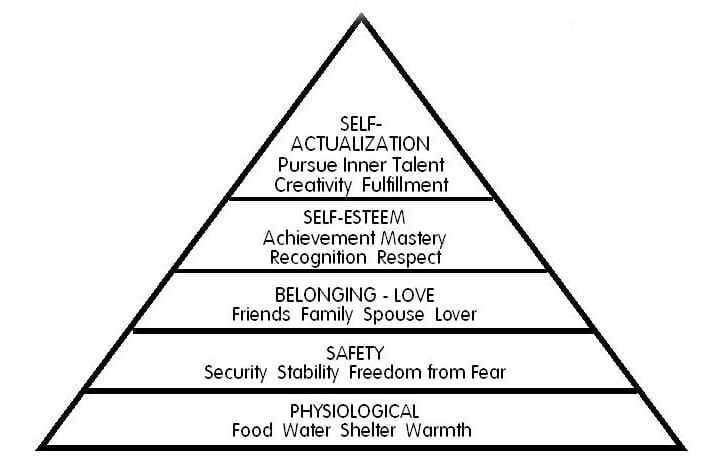
Thus, by offering these types of benefits to employees, they can become fully motivated and eager to work. Additionally, all of people’s needs are being fully satisfied according to Maslow’s Hierarchy of Needs Theory.

Saturday, July 14, 2012

Career Development - Multi Heading Is A New Approach To Problem Solving

Posted on 6 July, 2011

Career Development - Multi Heading Is a New Approach to Problem Solving

Team work always was an important component for task solving. Since not very long ago team approach is being applied also to self-managing groups. Such groups combined of people from different departments does not have dedicated team leader. All decision making is done by all members of the team during brain storming meetings etc. Such approach allows faster response to arising problems without involving any level of management staff. This is proven to be successful trick for increasing productivity.

However, there is still a need for a manager, who will oversee development process and make corrections if intended line of work is going aside from the intended result. For successful career building you need not only to work in a team, but also to be actual part of it. This means sharing success and glory with other members and also ability to withstand criticism and improve self.

Full time employees, part time, sub-contractors, external consultants can be found working together on specific project. Responsibility and tasks for each individual in the past were strictly set and there was no place to change those. Now areas of responsibility become softer and overlay each other. And it raises a new task for managers - how to stimulate such uneven motivated groups of people to succeed.

Today there is only one person who can make plans for your career and it is of course yourself. No one, not your boss or colleagues, nor astrologist can write such career development plan for you. You must do it yourself. Describe targets and steps which are to be taken in order to reach those. Imagine yourself as a General Manager for your career. You can have advisors; you can even follow advisors opinions. But there is only one person to make strategic decisions in career development and it is you.

You have to set a great goal for your career. Don't make it very specific if you are at the very beginning. You can't know where you will end up in 25-30 years. Your goals have to be some general but clearly describe the altitude you are going to climb. Decide on how to measure your success. Is it going to be your annual compensation or maybe number of summer houses in Hamptons? Or just personal satisfaction by your success... You have to set somehow exact measuring scale for your career.

Job Promotion Criteria | Career Promotion Tips

Posted on 1 January, 2012

-->

How To Get The Job Promotion You Deserve

Thu, 03/04/2010 - 10:37

Tips For Climbing The Corporate Ladder

In these tough economic times, it's sometimes a challenge to hang onto your current job, much less get a promotion. However, with all the layoffs taking place, if you?re still employed, you could have more bargaining leverage than you think. Organizations value their best people in difficult times, and you could be just the leader they are looking for. Here are some tips for your advancement.

1. Make yourself indispensable. Make them unable to live without you. You don't have to be an expert in order to demonstrate simple strengths like solving problems and being a peacemaker. Find a way to make the office environment better through diplomacy, optimism and reliability.

2. Learn to get along with everyone. Organizations value people who can coexist with coworkers, whether it's the mailroom staff or the CEO. Volunteer to help out, go the extra mile to be cheerful and optimistic. Being an even-tempered employee can go a long way to make you memorable to your boss. Don't skip out on voluntary events like picnics or parties. Make yourself a part of the people you work with and bring with a positive attitude.

3. Show them your willingness to learn more. Commit to learning one or two new job skills every week. Expand your network, educate yourself on your industry, or talk to an expert in your field to advance your knowledge and experience. Ask senior people if there are projects you can be a part of, as a way to demonstrate that you are ready to make a step up.

4. Watch your timing. Wait until you have accomplished a major achievement to approach your boss. Even if promotions are handed out in spring, don?t be afraid to bring up your intentions to get ahead in summer. You never know when the opening might unexpectedly arise, and you want your boss to know you are ready now.

5. Save the company money. Even if you aren't in sales or responsible for bringing in direct revenue, you can be proactive in finding ways to streamline systems and then write a proposal about how to do it.

6. Excel at what you do. As simple as this seems, it isn't always the first thing people think of. Come in early, stay later, volunteer for tasks not on your job description or take on extra projects. Then keep a record of your success. It?s easier to showcase your reasons for the promotion if you have a clear record of all your successes. Highlight loyalty, innovations, and commitment to your organization.

7. Ask for help. Getting a mentor is a great way to climb the ladder of success. Now your mentor has a stake in your advancement as well, as you will reflect positively on them, too. You might even be grooming yourself to fill in their shoes when they retire or take a promotion themselves.

How To Choose The Right Career In Industrial Science

Posted on 2 August, 2011

How to Choose the Right Career in Industrial Science

A scientist has the option of working in academia or industry. While many scientists would want to work in research and make ground breaking discoveries that would effect mankind forever, there are also many important jobs and research to be done in industrial science that mean many important life changing discoveries. A career in industrial science may mean working in either the government or private sector and can be involved in research or manufacturing. Working in industrial science is a good career move for a scientist as they could find themselves inventing or improving equipment, such as the Particle Size Analyser.

Be prepared

As a scientist, if you have never worked in the private sector, you need to be prepared for the difference in outcomes of your research as it will become more profit driven and that your research will be geared towards the development of a product rather than just searching for answers or gaining knowledge. This may mean that you become limited with your research, and most likely the research topics you do have are chosen by the company or the marketing department, and that you will be required to work to a definite time limit. Be prepared for your research to be abandoned if it does not meet company targets or that you have a limit to the amount of funds that you can spend. You may also find that if your research doesn't meet it's expected objectives that the whole project could be shut down. There will also be pressure to come up with results and that deadlines to produce a product will be fixed to the marketing timeline rather than to the progress of your research.

Benefits

There are, however, benefits to working in industrial science rather than academia. A main benefit is actually seeing your research directly influence people's lives, and generally more quickly than any research done by academics. When working within a company you will have more resources available, in terms of money, research tools and databases. The success of a companies product starts with your research, and as the success of the product leads to sales for them, the company is going to insure you are well funded in your research. You can also find that research within industrial science can be very rewarding as your input will be highly valued. A valuable benefit is that a career in industrial science generally pays better than research in academia and that it affords a better work/life balance as you have more structured working hours, and do not have to commit time to applying for grants, teaching or advising students.

Choosing the right career

There are a variety of different fields within industrial science and some of these include environmental engineering, industrial microbiology, chemical engineering, nanotechnology and academic research. These careers can be found in various industries, such as biological sciences, agriculture, information and technology, within mining and mineral exploration, within the food industry or pharmaceutical companies. Work out what it is that interests you and what industry will best suit your scientific needs. Think about where your areas of interest in science will be satisfied by undertaking research in a particular industry.

The Basics Of Career Development

Posted on 5 September, 2011

The Basics of Career Development

Even though there might be some factors outside your control in your career, you should at least have a proper plan that is under your control.

Here are some basic strategies that will help you develop your career.

Make a Time-Bound Plan

As soon as you get your first job, make a time-bound plan as to how you would like to proceed in your career and how much time you will give yourself to reach particular goals.

Along with the time factor, include the method you will use. This is just a plan, so expect that it may not exactly meet your projections, particularly with regard to timing.

However, if you are off by a long shot, then it could be time to re-examine the methods you are employing or you might need to look at factors that may be preventing you from growing.

A plan is necessary so you can measure your growth.

Study Your Current Situation

After a few years into your career you will need to observe where you stand and then compare it with your plan. Check whether you are where you had planned to be by now.

If you are ahead, fine; but if you are lagging behind, then you will need to study the reasons for it. Check whether your boss is not giving you a promotion that you feel you deserve or whether you are not getting credit for innovative ideas you have contributed.

Identify the reason for the delay and act on it. If you have deviated too much from your plan, then it would be a good idea to make a fresh one based on what you have experienced.

Improve Your Career

You constantly need to monitor and develop your career. You cannot afford to become complacent or too comfortable in your job.

Times and situations are changing so fast that you need to be like a chameleon to adapt to these changes. Working toward improving your career by gaining additional skills and striving to remove obstacles will help you develop a strong and lasting career.

Study Your Role in Your Company

If you feel that by making a lateral move you will have a brighter future and better prospects for advancement, then go for it.

The more useful you are to your company, the greater your chances of moving up and the lesser your chances of being shown the door. When times are good, people do not think about their contribution to the company; but when times are bad, it is the people who are not contributing much that get the pink slips first.

So make a time-bound plan, stick to it as much as possible, and keep striving harder to get ahead in your career. These are the basics in career development, and those who follow them usually have successful careers.

How Much Does Microsoft Training Boost Your Career?

Posted on 3 November, 2011

How Much Does Microsoft Training Boost Your Career?

Lyndon Ogden

A lot of internet paper has been spent describing exactly what Microsoft training is and what it could mean to many aspects of your life, but you might have thought to yourself once or twice "yes, but what does it mean for my career, in the here and now?" Well in this article I intend to look at what it could mean to you.

In short, training equals money. The more training you have the higher the likelihood of finding a higher paid job, your newly found certification caries with it a pedigree of quality that can obviously factor greatly in an employers chance of hiring you, but you can be sure that when they look at your qualifications that Microsoft training will set you up for the perfect interview and give you a fantastic running start at basically all related jobs.

Spending time in the industry is the only thing that gives you a greater advantage than Microsoft training, and that will come to you in abundance in the new higher positions you're bound to hold within whatever company you choose to work at, or even becoming self employed.

Really then, the advantage of Microsoft is their record for providing quality training schemes, and the fact that when you put it on your CV people will sit up and pay attention to you as a candidate, they did when I completed mine and I haven't looked back since. It was an incredibly rewarding experience and I recommend it to everyone who wants to get ahead and expand their horizons.

Thursday, July 12, 2012

Organizational Behavior and Television MashUps

In September of last year my post What Do You Need From Work touched a nerve with readers generating more than 200 responses! You showed that you are as passionate about pop-culture as you are about office dynamics and organizational behavior.

I thought it would be fun to apply Maslow’s Hierarchy to a mashup TV world. Two of the television shows sited in reader responses were HBO’s Entourage and NBC’s The Office. Let’s imagine a world where Ari Gold and Michael Scott switch places. How would that switch effect the individual work environments?

Start with a level from Maslow’s Hierarchy and imagine how it would be manifested in this mashup. Here is an example:

Love and Belonging
Michael Scott would try too hard to become friends with Lloyd, putting his clients aside in an effort to woo his assistant. Freaked out his new employer’s affection, Lloyd would reluctantly agree to take Michael clubbing leading to more awkwardness than acceptance.

Use your imagination and have fun with this. If you are not familiar with these shows then tell me what other mashups would make for an interesting shift in work place dynamics. I can’t wait to read your responses!

I would like to offer special thanks to Jonathan and Rachel Horrigan for their Entourage and The Office specific comments in response to What Do You Need From Work.

Tuesday, July 10, 2012

Top Career Advice - More Choices and A Better Way of Life

Why Career Advice Is So Important

Choosing a career presents a nerve-racking decision, as it can have a life-long impact on you. Do not fret, as you can gain a clearer outlook into your future by thorough career planning.

Having a clear vision of the future can guide you by helping you set career goals and helping you on your way towards attaining them. Whether you are starting out on a new career or looking to change your current career, you will benefit enormously from taking sound advice.

Don't Spend Most of Your Life Doing ...

Chances are that you will be spending a great deal of time at your job, about 40 hours a week. Career advice and career profiling can guide you to a job that is enjoyable for you and matches your interests.

There are many reasons people change their careers and career advice can help them along the way. Some frequently cited reasons are:

Monday, July 9, 2012

The Best Places to Get Career Advice

As a high school student who is preparing for their college search, or as a working adult who is seeking a change in their professional status, it's important to determine what type of career you are interested in having. Friends and family can tell you what you should do, and what you should study, but is that necessarily the best type of career advice to take? Here are some excellent resources for career advice.

1. Guidance Counselor - if you're a high school student, speak with your guidance counselor about schools that may be good choices for the topics of study that interest you. Academically, they will know you better than most and can tell you the right schools to apply to based on your performance in school thus far.

2. US Bureau of Labor Statistics website - this site is a world of information regarding various careers, the degree required for the career, average salaries, and description of job responsibilities. It is the number one source for accurate and real information in the US job market.

Sunday, July 8, 2012

Poor Career Advice Is Pervasive Online

Indeed, let's hope you are not out of work, or have lost your job, and if you do still have a job like 90% of the workforce in the United States, I for one sincerely hope you keep it. But in the potential eventuality that you lose your job, it might be wise to think twice about taking career advice from online sources. Why is this you ask? Well, it's a decent question, but let me explain it for you in simple terms.

You see, many of the folks that have websites to give career advice write content for their websites that is totally stuffed with key words using SEO (search engine optimization) strategies, but in reality do not know a whole lot about careers. For instance, if you were in the logistical business and you were laid off, you'd want advice from someone that actually worked in that industry.

Many folks that own websites, know how to build websites, write content and attract internet surfers, but they don't know much about careers or employment, as many of them are self employed, they may never have actually had a real job in their lives. See that point?

Saturday, June 30, 2012

Some Challenging And Inspiring Careers

Posted on 6 December, 2011

Some Challenging and Inspiring Careers

78

Do you like the idea of being challenged every time you turn up for work? There are some brains that are designed to be challenged and learn. If you're one of those people then the ideal job could be one in which constantly confronted with new opportunities, new ideas and new challenges.

Here are some careers that will challenge you each and everyday.

Education

Education is probably one of the best fields those of us a little more curious than the rest. What could be better then sharing your passion for knowledge with young, impressionable minds who will challenge you and force you to rethink everything you take for granted?

Challenging? Without a doubt.

Whether you are teaching preschool toddlers, high school students or undergraduates, Education is certainly a field which will keep feeding your brain.

Healthcare

As science moves forward and we learn more about our bodies, healthcare workers are continually learning and updating our knowledge. Every time a new treatment, drug or illness comes out - you will need to be on the case so that you can treat people effectively.

Talent and a curious nature are definitely at home in healthcare.

Technology

As you'd expect, learning new things and technology go hand in hand. As technology develops you will need to be at the cutting edge of the industry so that you can continue to offer your services to companies or individuals. A little curiosity goes a long way in the technology business.

Business

The age old industry of business is definitely one of the most likely places to find new and exciting ventures as companies and individuals try to set themselves apart from the rest. The field of business is continually looking for bright minds and enthusiastic candidates to put themselves forward for a well paid career.

Using your curiosity and inquisitive mind to your advantage can really take you places, ensuring you are on the edge of the next ground breaking discovery. The once annoying childish trait of asking lots of questions is definitely an asset in the industries I've mentioned above as well as a whole host more.

Start out by focusing your energies on training and in a few years, you could be well on your way to a well paid and very satisfying career.