One of the worst pieces of career advice that I bet each of you has not only gotten but given is to “do what you love.” Forget that. It's absurd.
Thursday, July 26, 2012
Webisodes are the New Startups to Watch
In this blog we like to take a look at different shows like The Office and Undercover Boss to examine organizational behavior, and mentoring and success strategies as they relate to the entertainment industry. Television shows produced by the top networks are almost an exact microcosm of the companies that spawned them. They have all the aforementioned hierarchies and structures in place. Every employee involved, from the director to the key grip is a specialist in their niche.
This, however, is definitely not the case in the emerging webisode industry. Like any other start-up company, webisodes ask employees to be more varied and excel in multiple functions. The director is also a producer, show runner and production assistant. Check out the links to the two very different webisodes below. The first is from a show called Epic Meal Time. The show has an enormous following, but a format structured specifically for ten minute web videos. The is taken from Live from Daryl’s House. In this show Daryl Hall of Hall and Oates fame invites musicians to his country house to hangout and perform. The success of this show has led to it being picked up for network television.
My question to you is this: How do you think mentoring and success strategies play a role in Epic Meal Time where hierarchy and specialization have yet to take root? And do you think a more corporate approach as seen in Live from Daryl’s House improves or diminishes the webisodes authenticity?
Looking forward to hearing your take on this!
Epic Meal Time: Ultimate Pizza Sandwich
Live from Daryl’s House: Episode 54 – Butch Walker
Image Credit: EpicMealTime.com
Wednesday, July 18, 2012
Organizational Behavior and Casual Friday
Today, most employees are too smart to fall for this sort of 'Casual Dress Friday' trickery, and companies are much more cautious about handing out fringe benefits that damage productivity. Nowadays employers are mainly focused on the bottom line. So by now you're probably asking, how does this change/addition affect me?
In May of 2011 I wrote a blog entry entitled: Undercover Boss: CEO or Santa Claus. I found the comment below particularly impressive. It provides a link to a clip regarding the different fringe benefits that employees of Google are receiving. Google's success strategy has been to release several programs that in my opinion are a giant leap forward in fringe benefits. The programs provide needed resources with an attached financial/bottom line value for both the employer and employee.
One great example is that Google provides its employees with free breakfast and lunch- every day! By providing complimentary meals to employees Google keeps them on site, interacting and brainstorming with each other. This not only keeps them happy but all but guarantees an increase in productivity. Additionally, employees can do the math to figure out that these extra meals are essentially a pay increase.
So here is my challenge to you. Read Nicole’s response and watch the video clip, then in the comments section tell me what additional benefits some companies could offer that would meet fulfill the needs of equity theory and help bottom line of the company.
Get creative with your responses! :)
Nicole Uy says:
April 7, 2012 at 7:13 pm
Personally, I love watching Undercover Boss too. I’ve watched different episodes featuring the CEOs of Hooters, 7-Eleven, Choice Hotels Int’l, Great Wolf Lodge and etc. While I believe that these CEOs who have volunteered to go undercover have good and honest intentions, I think that the “temporary/ one-time rewards” they offer to some employees are not necessarily beneficial. Aside from the fact that these rewards are only given to a select few, I don’t think the CEOs can really improve the condition of their companies unless they truly address the main issue: treat employees/ human capital better by offering more benefits and perks. Although it may be costly for companies, we have learned in class that the benefits definitely outweigh the burdens. When employees are being treated well and when they are satisfied, there is higher productivity, better customer service, and generally, a happy and warm atmosphere.
http://www.youtube.com/watch?v=_QqT38QRA84
Aside from companies like SAS and Zappos that we have discussed in class, Google also treats its employees well. The video clip I found talks about just some of the numerous perks of working at Google, which is currently the 4th best company to work for. As you can see from the video, Google definitely spoils its employees. Not only does Google provide gourmet food, free laundry services, free massages, and gym facilities, it also provides free bus services to the office! Therefore, I think that by truly focusing on the wellness and happiness of employees, Google is able to utilize them to their full potential, as well as benefit from their various skills and knowledge. Additionally, unlike the ones offered in Undercover Boss, these benefits are long-term and permanent. Also, they are available to every single employee, from the lower levels to the highest levels.
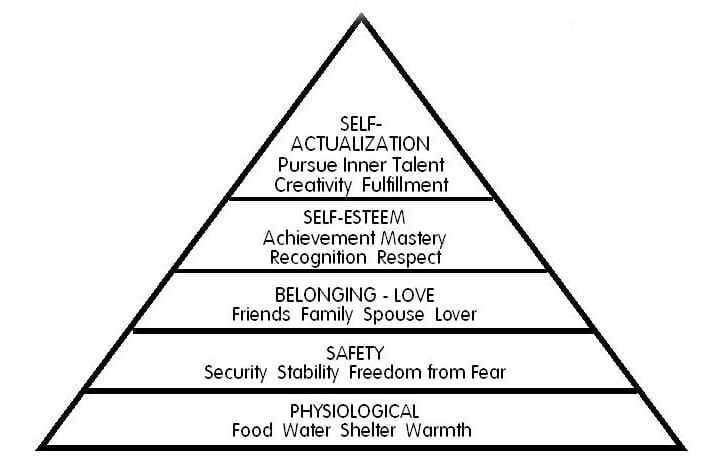
Thus, by offering these types of benefits to employees, they can become fully motivated and eager to work. Additionally, all of people’s needs are being fully satisfied according to Maslow’s Hierarchy of Needs Theory.
Saturday, July 14, 2012
Career Development - Multi Heading Is A New Approach To Problem Solving
Posted on 6 July, 2011
Team work always was an important component for task solving. Since not very long ago team approach is being applied also to self-managing groups. Such groups combined of people from different departments does not have dedicated team leader. All decision making is done by all members of the team during brain storming meetings etc. Such approach allows faster response to arising problems without involving any level of management staff. This is proven to be successful trick for increasing productivity. However, there is still a need for a manager, who will oversee development process and make corrections if intended line of work is going aside from the intended result. For successful career building you need not only to work in a team, but also to be actual part of it. This means sharing success and glory with other members and also ability to withstand criticism and improve self. Full time employees, part time, sub-contractors, external consultants can be found working together on specific project. Responsibility and tasks for each individual in the past were strictly set and there was no place to change those. Now areas of responsibility become softer and overlay each other. And it raises a new task for managers - how to stimulate such uneven motivated groups of people to succeed. Today there is only one person who can make plans for your career and it is of course yourself. No one, not your boss or colleagues, nor astrologist can write such career development plan for you. You must do it yourself. Describe targets and steps which are to be taken in order to reach those. Imagine yourself as a General Manager for your career. You can have advisors; you can even follow advisors opinions. But there is only one person to make strategic decisions in career development and it is you. You have to set a great goal for your career. Don't make it very specific if you are at the very beginning. You can't know where you will end up in 25-30 years. Your goals have to be some general but clearly describe the altitude you are going to climb. Decide on how to measure your success. Is it going to be your annual compensation or maybe number of summer houses in Hamptons? Or just personal satisfaction by your success... You have to set somehow exact measuring scale for your career. |
Job Promotion Criteria | Career Promotion Tips
Posted on 1 January, 2012
How To Get The Job Promotion You Deserve
Tips For Climbing The Corporate Ladder
In these tough economic times, it's sometimes a challenge to hang onto your current job, much less get a promotion. However, with all the layoffs taking place, if you?re still employed, you could have more bargaining leverage than you think. Organizations value their best people in difficult times, and you could be just the leader they are looking for. Here are some tips for your advancement.
1. Make yourself indispensable. Make them unable to live without you. You don't have to be an expert in order to demonstrate simple strengths like solving problems and being a peacemaker. Find a way to make the office environment better through diplomacy, optimism and reliability.
2. Learn to get along with everyone. Organizations value people who can coexist with coworkers, whether it's the mailroom staff or the CEO. Volunteer to help out, go the extra mile to be cheerful and optimistic. Being an even-tempered employee can go a long way to make you memorable to your boss. Don't skip out on voluntary events like picnics or parties. Make yourself a part of the people you work with and bring with a positive attitude.
3. Show them your willingness to learn more. Commit to learning one or two new job skills every week. Expand your network, educate yourself on your industry, or talk to an expert in your field to advance your knowledge and experience. Ask senior people if there are projects you can be a part of, as a way to demonstrate that you are ready to make a step up.
4. Watch your timing. Wait until you have accomplished a major achievement to approach your boss. Even if promotions are handed out in spring, don?t be afraid to bring up your intentions to get ahead in summer. You never know when the opening might unexpectedly arise, and you want your boss to know you are ready now.
5. Save the company money. Even if you aren't in sales or responsible for bringing in direct revenue, you can be proactive in finding ways to streamline systems and then write a proposal about how to do it.
6. Excel at what you do. As simple as this seems, it isn't always the first thing people think of. Come in early, stay later, volunteer for tasks not on your job description or take on extra projects. Then keep a record of your success. It?s easier to showcase your reasons for the promotion if you have a clear record of all your successes. Highlight loyalty, innovations, and commitment to your organization.
7. Ask for help. Getting a mentor is a great way to climb the ladder of success. Now your mentor has a stake in your advancement as well, as you will reflect positively on them, too. You might even be grooming yourself to fill in their shoes when they retire or take a promotion themselves.
How To Choose The Right Career In Industrial Science
Posted on 2 August, 2011
A scientist has the option of working in academia or industry. While many scientists would want to work in research and make ground breaking discoveries that would effect mankind forever, there are also many important jobs and research to be done in industrial science that mean many important life changing discoveries. A career in industrial science may mean working in either the government or private sector and can be involved in research or manufacturing. Working in industrial science is a good career move for a scientist as they could find themselves inventing or improving equipment, such as the Particle Size Analyser. Be prepared As a scientist, if you have never worked in the private sector, you need to be prepared for the difference in outcomes of your research as it will become more profit driven and that your research will be geared towards the development of a product rather than just searching for answers or gaining knowledge. This may mean that you become limited with your research, and most likely the research topics you do have are chosen by the company or the marketing department, and that you will be required to work to a definite time limit. Be prepared for your research to be abandoned if it does not meet company targets or that you have a limit to the amount of funds that you can spend. You may also find that if your research doesn't meet it's expected objectives that the whole project could be shut down. There will also be pressure to come up with results and that deadlines to produce a product will be fixed to the marketing timeline rather than to the progress of your research. There are, however, benefits to working in industrial science rather than academia. A main benefit is actually seeing your research directly influence people's lives, and generally more quickly than any research done by academics. When working within a company you will have more resources available, in terms of money, research tools and databases. The success of a companies product starts with your research, and as the success of the product leads to sales for them, the company is going to insure you are well funded in your research. You can also find that research within industrial science can be very rewarding as your input will be highly valued. A valuable benefit is that a career in industrial science generally pays better than research in academia and that it affords a better work/life balance as you have more structured working hours, and do not have to commit time to applying for grants, teaching or advising students. Choosing the right career There are a variety of different fields within industrial science and some of these include environmental engineering, industrial microbiology, chemical engineering, nanotechnology and academic research. These careers can be found in various industries, such as biological sciences, agriculture, information and technology, within mining and mineral exploration, within the food industry or pharmaceutical companies. Work out what it is that interests you and what industry will best suit your scientific needs. Think about where your areas of interest in science will be satisfied by undertaking research in a particular industry. |
The Basics Of Career Development
Posted on 5 September, 2011
Even though there might be some factors outside your control in your career, you should at least have a proper plan that is under your control. Here are some basic strategies that will help you develop your career. Make a Time-Bound Plan As soon as you get your first job, make a time-bound plan as to how you would like to proceed in your career and how much time you will give yourself to reach particular goals. Along with the time factor, include the method you will use. This is just a plan, so expect that it may not exactly meet your projections, particularly with regard to timing. However, if you are off by a long shot, then it could be time to re-examine the methods you are employing or you might need to look at factors that may be preventing you from growing. A plan is necessary so you can measure your growth. Study Your Current Situation After a few years into your career you will need to observe where you stand and then compare it with your plan. Check whether you are where you had planned to be by now. If you are ahead, fine; but if you are lagging behind, then you will need to study the reasons for it. Check whether your boss is not giving you a promotion that you feel you deserve or whether you are not getting credit for innovative ideas you have contributed. Identify the reason for the delay and act on it. If you have deviated too much from your plan, then it would be a good idea to make a fresh one based on what you have experienced. Improve Your Career You constantly need to monitor and develop your career. You cannot afford to become complacent or too comfortable in your job. Times and situations are changing so fast that you need to be like a chameleon to adapt to these changes. Working toward improving your career by gaining additional skills and striving to remove obstacles will help you develop a strong and lasting career. Study Your Role in Your Company If you feel that by making a lateral move you will have a brighter future and better prospects for advancement, then go for it. The more useful you are to your company, the greater your chances of moving up and the lesser your chances of being shown the door. When times are good, people do not think about their contribution to the company; but when times are bad, it is the people who are not contributing much that get the pink slips first. So make a time-bound plan, stick to it as much as possible, and keep striving harder to get ahead in your career. These are the basics in career development, and those who follow them usually have successful careers. |
How Much Does Microsoft Training Boost Your Career?
Posted on 3 November, 2011
A lot of internet paper has been spent describing exactly what Microsoft training is and what it could mean to many aspects of your life, but you might have thought to yourself once or twice "yes, but what does it mean for my career, in the here and now?" Well in this article I intend to look at what it could mean to you. In short, training equals money. The more training you have the higher the likelihood of finding a higher paid job, your newly found certification caries with it a pedigree of quality that can obviously factor greatly in an employers chance of hiring you, but you can be sure that when they look at your qualifications that Microsoft training will set you up for the perfect interview and give you a fantastic running start at basically all related jobs. Spending time in the industry is the only thing that gives you a greater advantage than Microsoft training, and that will come to you in abundance in the new higher positions you're bound to hold within whatever company you choose to work at, or even becoming self employed. Really then, the advantage of Microsoft is their record for providing quality training schemes, and the fact that when you put it on your CV people will sit up and pay attention to you as a candidate, they did when I completed mine and I haven't looked back since. It was an incredibly rewarding experience and I recommend it to everyone who wants to get ahead and expand their horizons. |
Thursday, July 12, 2012
Organizational Behavior and Television MashUps
I thought it would be fun to apply Maslow’s Hierarchy to a mashup TV world. Two of the television shows sited in reader responses were HBO’s Entourage and NBC’s The Office. Let’s imagine a world where Ari Gold and Michael Scott switch places. How would that switch effect the individual work environments?
Start with a level from Maslow’s Hierarchy and imagine how it would be manifested in this mashup. Here is an example:
Love and Belonging
Michael Scott would try too hard to become friends with Lloyd, putting his clients aside in an effort to woo his assistant. Freaked out his new employer’s affection, Lloyd would reluctantly agree to take Michael clubbing leading to more awkwardness than acceptance.
Use your imagination and have fun with this. If you are not familiar with these shows then tell me what other mashups would make for an interesting shift in work place dynamics. I can’t wait to read your responses!
I would like to offer special thanks to Jonathan and Rachel Horrigan for their Entourage and The Office specific comments in response to What Do You Need From Work.
Tuesday, July 10, 2012
Top Career Advice - More Choices and A Better Way of Life
Choosing a career presents a nerve-racking decision, as it can have a life-long impact on you. Do not fret, as you can gain a clearer outlook into your future by thorough career planning.
Having a clear vision of the future can guide you by helping you set career goals and helping you on your way towards attaining them. Whether you are starting out on a new career or looking to change your current career, you will benefit enormously from taking sound advice.
Don't Spend Most of Your Life Doing ...
Chances are that you will be spending a great deal of time at your job, about 40 hours a week. Career advice and career profiling can guide you to a job that is enjoyable for you and matches your interests.
There are many reasons people change their careers and career advice can help them along the way. Some frequently cited reasons are:
Monday, July 9, 2012
The Best Places to Get Career Advice
1. Guidance Counselor - if you're a high school student, speak with your guidance counselor about schools that may be good choices for the topics of study that interest you. Academically, they will know you better than most and can tell you the right schools to apply to based on your performance in school thus far.
2. US Bureau of Labor Statistics website - this site is a world of information regarding various careers, the degree required for the career, average salaries, and description of job responsibilities. It is the number one source for accurate and real information in the US job market.
Sunday, July 8, 2012
Poor Career Advice Is Pervasive Online
You see, many of the folks that have websites to give career advice write content for their websites that is totally stuffed with key words using SEO (search engine optimization) strategies, but in reality do not know a whole lot about careers. For instance, if you were in the logistical business and you were laid off, you'd want advice from someone that actually worked in that industry.
Many folks that own websites, know how to build websites, write content and attract internet surfers, but they don't know much about careers or employment, as many of them are self employed, they may never have actually had a real job in their lives. See that point?